
Wood vs. vinyl vs. aluminum: which fence material is right for you?
An honest, side-by-side comparison of the most popular fence materials — cost, lifespan, upkeep, and privacy — so you can choose with confidence for your Georgia home.
Fence materials at a glance
The five materials we install most across metro Atlanta, side by side. Every yard is different, so use this to narrow your choice, then get a free on-site estimate for an exact, itemized price.
| Material | Relative cost | Lifespan | Maintenance | Privacy | Best for |
|---|---|---|---|---|---|
| Chain link | $Budget | 15–20+ yrs | Very low | None (see-through) | Budget security, pets & large areas |
| Wood | $$Mid | 15–20 yrs | High | Full available | Natural look & full privacy on a budget |
| Aluminum Wrought iron & steel |
$$$Premium | 30+ yrs | Low | Open / decorative | Curb appeal, slopes & pool code |
| Vinyl | $$$Premium | 30+ yrs | Very low | Full available | Low-upkeep privacy, clean look |
| Composite (Trex) | $$$$Top tier | 25–30+ yrs | Low | Full available | Premium wood look, no staining |
$ to $$$$ = relative cost, not a quote. Wood, chain link, and aluminum & steel have per-foot ranges in our fence cost guide; vinyl and composite are quoted per project.
A closer look at each material
What each one is great at, what to watch for, and who it's best for.
Wood
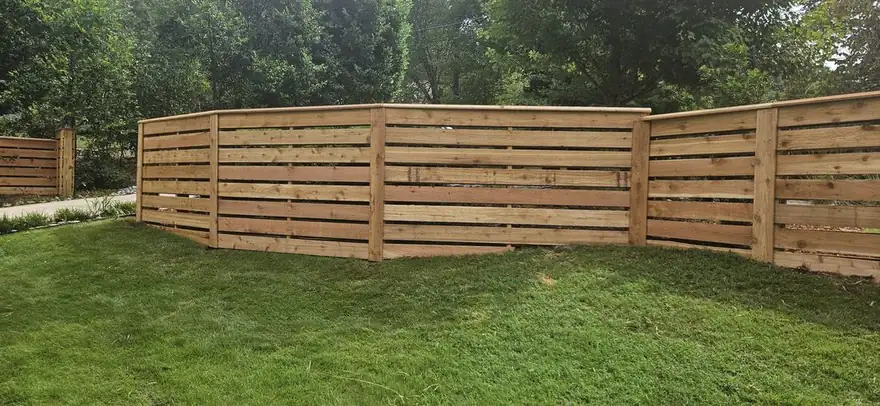
Warm, natural, and the most budget-friendly way to get full privacy. Cedar and pressure-treated pine resist Georgia's termites and last about 15–20 years, but need sealing or staining every few years to fight humidity, rot, and splitting. Best for classic backyards on a budget. Wood privacy fences →
Vinyl
Virtually maintenance-free — an occasional rinse keeps it looking new for 30+ years, with no rot, peeling, or painting. Costs more up front than wood but saves on upkeep. Best for set-and-forget privacy. Vinyl fences →
Aluminum & steel
Elegant, rust-proof ornamental metal that lasts 30+ years and racks to follow sloped Georgia lots. Meets pool-barrier code. See-through rather than private. Best for curb appeal, pools, and hills. Lightweight aluminum → or the heavier wrought-iron look in steel →.
Chain link
The most economical way to enclose a yard — galvanized or black vinyl-coated, low-maintenance, and great for pets and large areas. No privacy unless you add slats. Best for budget security. Chain link fences →
Composite (Trex)
The look of wood without the upkeep — composite resists rot, insects, and fading for 25–30+ years and never needs staining. A premium price for a premium product. Best for low-maintenance privacy that still looks like wood. Trex composite fences →
Pick by what matters most to you
Start from your top priority and work back to the material that fits it best.
Most privacy
Wood or vinyl privacy panels give you a solid, full-height screen.
Lowest maintenance
Vinyl and aluminum — rinse with a hose and forget it.
Tightest budget
Chain link, or wood picket and split rail, stretch the dollar furthest.
Best curb appeal
Ornamental aluminum or steel; a well-built wood fence is a close second.
Pets & pool
Aluminum meets pool code; chain link or wood keeps pets secure.
Longest lifespan
Vinyl, aluminum, and composite all last 30+ years in Georgia.
Want real numbers? Our fence cost guide breaks down approximate 2026 price-per-foot ranges for each type, plus what moves the price up or down.
See the full fence cost guide →Still not sure which material?
Tell us about your yard and goals — we'll recommend the right fence and send a free, itemized estimate.
Fence material FAQ
Straight answers on choosing between wood, vinyl, aluminum, and the rest.
Start with the fence's main job — keeping kids and pets safe in the yard, screening a busy street or close-set neighbors, meeting pool code, or adding curb appeal and property value. Then weigh four things: budget, how much upkeep you'll do, the look you want, and your neighborhood's rules — many metro Atlanta HOAs limit fence materials, heights, and colors, so check your covenants (and see our Georgia fence laws guide) before you decide.
It depends on your priority. Wood gives a warm, natural look and full privacy at the lowest upfront cost, but needs sealing every few years. Vinyl is nearly maintenance-free and lasts 30+ years. Aluminum and steel are elegant, rust-proof, and pool-code friendly, but see-through rather than private. In metro Atlanta, most homeowners pick wood privacy for budget-friendly backyards, aluminum for curb appeal and pools, and vinyl to install once and forget.
Vinyl, aluminum and steel, and composite all last 30+ years in Georgia's climate, while wood lasts about 15–20 years with regular sealing. Aluminum won't rust and vinyl won't rot, which is why they outlast wood here.
Vinyl and aluminum are the lowest-maintenance — an occasional rinse is about it — with composite close behind. Wood needs cleaning and re-sealing or staining every couple of years in Georgia's humidity, or it grays and can warp.
Ornamental aluminum is the top pool choice in Georgia: it meets pool-barrier code with a self-closing, self-latching gate and no easily climbable horizontal rails, and it never rusts in the splash zone.
Modern vinyl has come a long way — textured and wood-grain finishes look far better than the glossy white panels of years past. Some homeowners still prefer the grain of real wood or the elegance of aluminum; vinyl's edge is that it stays looking new with almost no upkeep.
Ornamental aluminum and steel give the most upscale, wrought-iron look, while a well-built wood privacy or picket fence is a classic that buyers love. Composite is a premium wood-look option. Any quality, professionally installed fence helps resale.
Georgia's humidity and red clay are the deciding factors. Aluminum, vinyl, and composite shrug off humidity and won't rot, which makes them ideal for low-maintenance longevity. Wood is still a great choice if you'll seal it on schedule, and rackable aluminum follows sloped clay lots cleanly.
Wood is usually cheaper up front, especially picket and standard privacy, while vinyl costs more to install but saves years of staining and repairs. Over a 20–30 year life the gap narrows. See our fence cost guide for per-foot ranges.
Ready for your free estimate?
Tell us about your project — we'll get back fast, usually the same day.
Backed by our $10,000 Make It Right Guarantee — and rated 4.9★ by 880+ local neighbors.